Place Betting Strategy UK: Horse Racing Methods
 Available in US
Table of Contents
- Discipline in UK Place Betting Strategies
- The Each-Way Thief Method: Backing Outsiders for Place Profit
- Field Size as a Strategy Filter: 8-9 vs 16+ Runners
- Backing Favourites to Place: The Strike-Rate Argument
- Spotting Overround Gaps in the Place Market
- Staking Plans for Place Bettors: Level, Percentage, and Kelly
- Building a Repeatable Place Betting System
- Frequently Asked Questions
- Sources
Discipline in UK Place Betting Strategies
Three years into my career as a racing analyst, I ran a twelve-month experiment. I split my betting bank in half and ran two parallel approaches: one portfolio backing horses to win at value prices, another backing selections each-way using place-focused criteria. The win portfolio had bigger individual scores but deeper drawdowns. The place portfolio ground out a steady return with roughly half the variance. That experiment shaped everything I have done since — not because place betting is inherently superior, but because it rewards a different kind of discipline.
Favourites in British horse racing win approximately 30-35% of the time. That means roughly two-thirds of all races are won by a horse that was not the shortest price in the market. For win bettors, that 65-70% miss rate demands either exceptional selection skill or deep pockets to absorb long losing runs. Place betting compresses the miss rate. A horse that has a 10% chance of winning might have a 30% chance of finishing in the top three. The each-way bettor is not working with better information — they are working with a wider margin for error, and that wider margin turns consistency into profit over time.
The best place bettors I have encountered treat it as a systematic process rather than a series of punts. They define criteria before looking at a race card. They track results over hundreds of bets, not dozens. They ignore individual outcomes and focus on whether their selection method produces a positive strike rate at odds that cover the double stake. That is what I mean by discipline: not willpower, but process. Understanding when to use a place bet instead of a win bet is part of that process, and in this section of the guide, I am going to lay out the specific strategies and filters that make a place betting process repeatable and, over sufficient sample sizes, profitable.
The Each-Way Thief Method: Backing Outsiders for Place Profit
The term “each-way thief” sounds like a gimmick. It is not. It is the most widely discussed place strategy in UK racing circles, and when applied with proper filters, it delivers exactly what it promises: place-leg profits from horses that were never expected to win.
The concept is built on a specific market inefficiency. The place market’s overround — the bookmaker’s built-in margin — is significantly higher than the win market’s. The place odds are derived from the win odds via the 1/4 fraction, and that fraction is applied uniformly regardless of whether it accurately reflects each horse’s true place probability. The result: some horses at longer prices have place odds that understate their genuine chance of finishing in the frame.
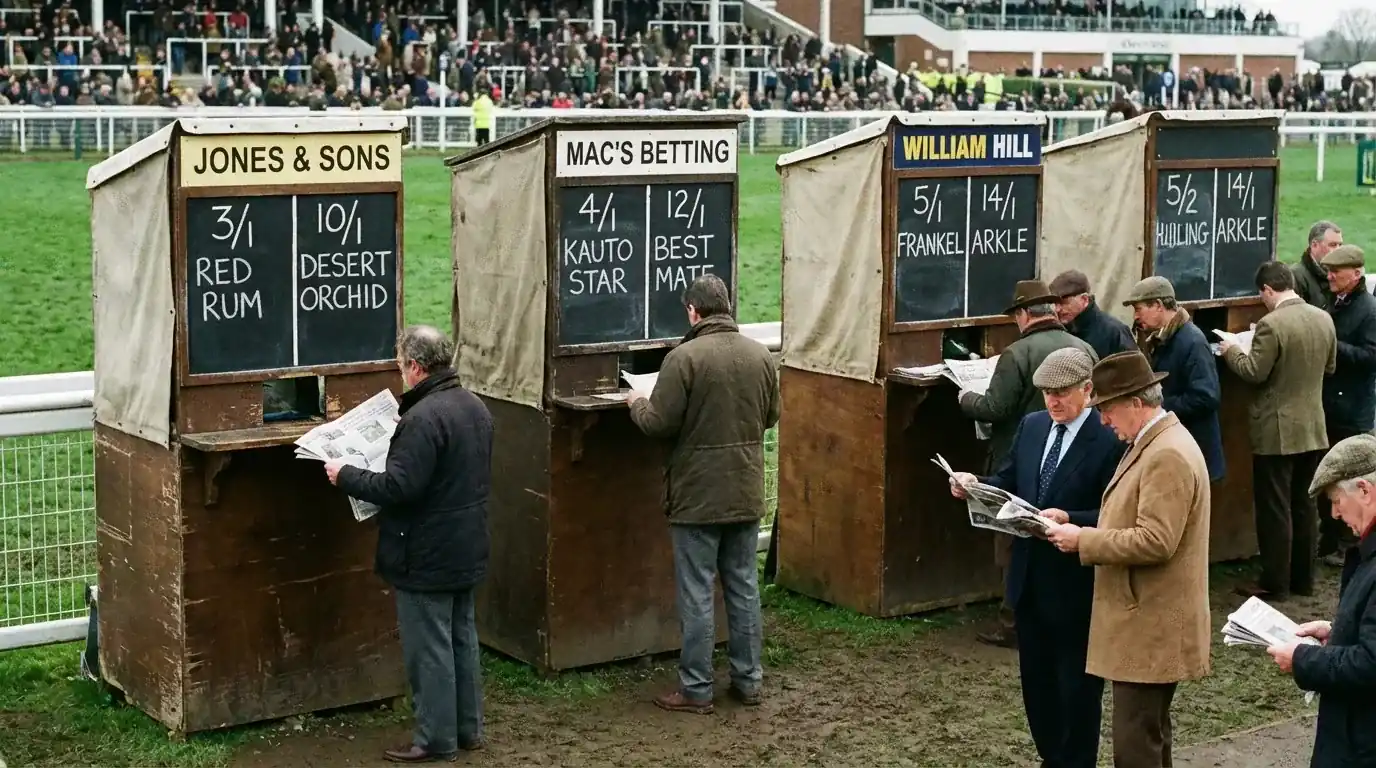
The each-way thief targets these horses. You are looking for runners priced between roughly 10/1 and 25/1 whose form suggests a realistic place chance — consistent finishing positions, proven at the distance and going, a run style that suits the race dynamics — but whose win odds are long because they lack the finishing speed or class to beat the market leaders. You do not expect the horse to win. You expect it to place, and at 1/4 odds on a 16/1 shot, the place leg alone pays 4/1. A five-pound each-way bet returns twenty-five pounds on a place-only result: fifteen pounds net profit after deducting the ten-pound total outlay.
Second favourites on UK Flat turf have a win strike rate of 19.4% from over 36,000 runs. The each-way thief is not interested in second favourites — it operates further down the market where the win strike rate is lower but the place rate relative to the odds creates value. The sweet spot, in my experience, is the zone where a horse’s implied win probability is 4-8% but its realistic place probability is 20-35%. That gap between the implied win chance and the actual place chance is where the profit hides.
Two critical filters make the method work. First, field size: this strategy demands races with at least twelve runners, ideally sixteen-plus where four places are paid. In smaller fields, the place fractions do not generate enough return to cover the double stake on an outsider. Second, race type: competitive handicaps are the primary hunting ground. Conditions races and Group events tend to have more predictable form hierarchies, which compresses the place market and removes the inefficiency the method exploits.
Field Size as a Strategy Filter: 8-9 vs 16+ Runners
If someone asked me to name the single most important variable in place betting strategy, I would not say odds, form, or going. I would say field size. The number of runners in a race determines how many places are paid, how competitive the market is, and how much each-way value exists at every price point. Get the field-size filter right and the rest of the strategy becomes dramatically easier.
Races with eight or nine runners sit at the lower end of three-place territory. Three places are paid at 1/4 odds, which is the standard package. But in an eight-runner race, three out of eight means 37.5% of the field finishes in the places. That is a generous ratio, and the market prices reflect it — the place odds on shorter-priced horses are compressed because the bookmaker knows the probability of placing is high relative to the field size. For the each-way bettor, the value at this level tends to exist on mid-priced runners (6/1 to 10/1) whose form gives them a solid frame chance in a field where one or two runners are likely to underperform.
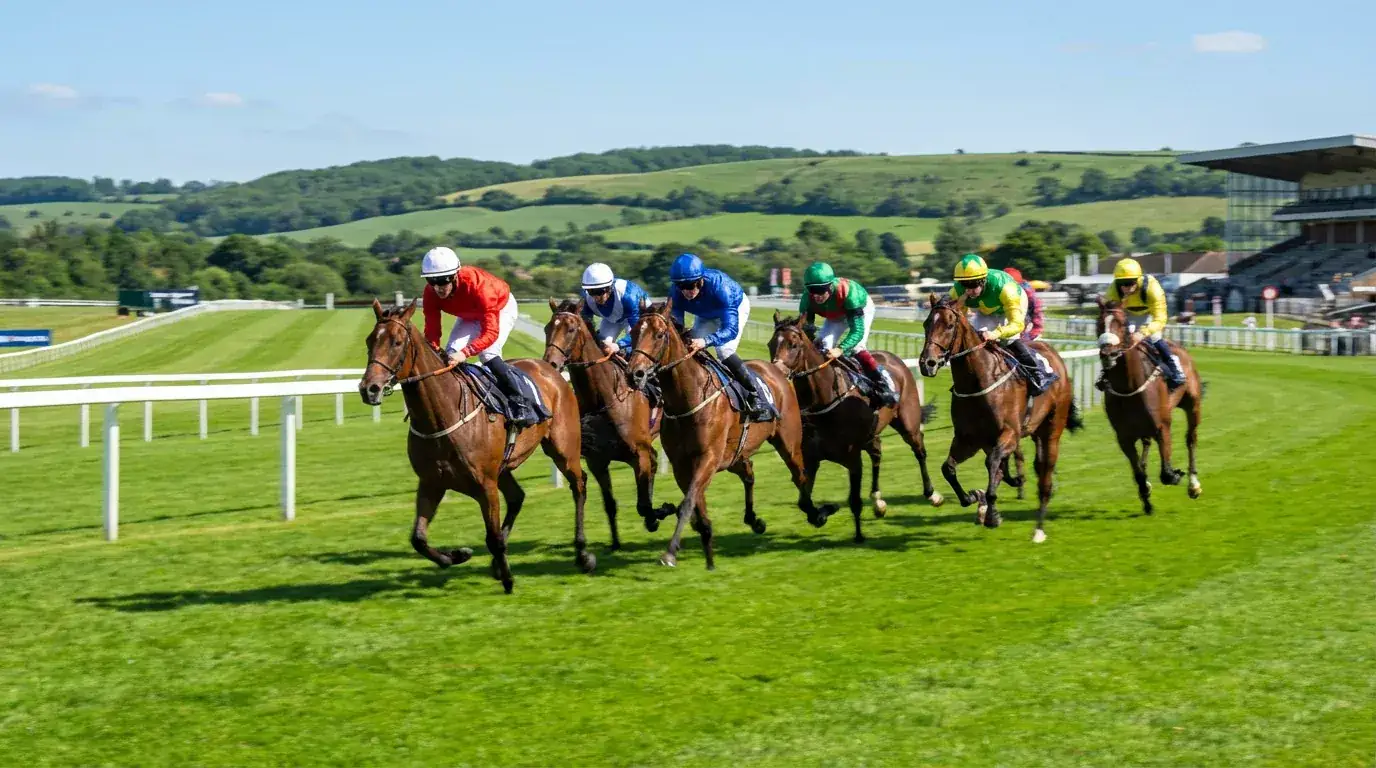
At sixteen-plus runners, the dynamic shifts entirely. Four places are paid instead of three, but four out of sixteen is 25% — a lower ratio than three out of eight. The crucial difference is that the longer prices in big fields generate far more substantial place returns. A 20/1 shot in a twenty-runner handicap pays 5/1 on the place. That is a genuinely profitable standalone result. The variance is higher — your horse needs to beat fifteen or more rivals to finish fourth — but the reward per successful place is larger, and the field’s competitiveness means short-priced horses are more vulnerable to being outrun.
The threshold zone between nine and fifteen runners is where I am most cautious. Three places at 1/4 odds in a twelve-runner race is perfectly adequate, but the step from fifteen to sixteen runners — from three places to four in a handicap — creates a cliff edge in value. I have learned to check whether a borderline sixteen-runner handicap might lose a runner to withdrawal before the off. If the field is expected to hold, the four-place terms make the race attractive. If withdrawals are likely, I often wait until closer to post time to confirm the runner count before committing.
Odds-on favourites win around 55-60% of the time on the Flat in the UK. In big-field handicaps, however, no horse holds that kind of dominance — the weights are designed to equalise the field. That structural levelling is what makes sixteen-plus runner handicaps the richest territory for systematic place betting. The form is harder to read, the outcomes are more dispersed, and the place market is less efficient.
Backing Favourites to Place: The Strike-Rate Argument
Every punter I know has had the same thought at some point: if favourites win a third of the time, surely they place far more often — so why not just back them to place and collect a steady stream of small returns? The logic is seductive. The reality is more nuanced than it appears.
Favourites do place more often than they win. On the UK Flat, odds-on favourites win around 55-60% of the time, which means their place rate — finishing in the top two or three — is comfortably above 70%. Even at longer favourite prices, the place strike rate is high enough that backing favourites to place produces a reliable hit rate. The problem is not the strike rate. The problem is the odds.
A favourite priced at 2/1 in a ten-runner race has place odds of 1/2 at the 1/4 fraction. A five-pound each-way bet on a 2/1 favourite that places but does not win returns seven pounds fifty from the place leg — against a total outlay of ten pounds. That is a two-pound-fifty loss. To break even on place-only results, you need the favourite to be priced at 5/1 or higher, and by definition, a 5/1 shot is rarely the favourite. The mathematics of short-priced favourite place backing creates a structural deficit that no strike rate can overcome unless the favourite also wins often enough to compensate through the win leg.
Where favourite place backing does have a strategic role is as part of a broader place betting approach. Odds-on favourites priced at 1.25 or shorter win approximately 86% of their races. At that level, the win leg almost always pays, and the place leg is a small bonus. But the returns are tiny relative to the stake, and one loss wipes out many wins. The more productive angle, in my experience, is to use favourite place data as a contrarian signal: if the favourite has a strong place record, the other runners must share the remaining place positions, which compresses their place probability. That compression often creates each-way value on the second or third horse in the market rather than on the favourite itself.
Spotting Overround Gaps in the Place Market
I spend more time analysing the overround on place markets than most punters spend on form. That might sound excessive, but the overround is the single most reliable indicator of where value does and does not exist in the each-way product, and most bettors never look at it.
The overround is the percentage by which the bookmaker’s implied probabilities exceed 100%. In a perfectly fair market, all the implied probabilities would sum to exactly 100%. In practice, they sum to 110%, 120%, or more — the excess is the bookmaker’s margin. On the win market, a typical overround runs between 110% and 125%. On the place market, the overround is materially higher because the place odds are derived from the win odds via the 1/4 fraction, which does not perfectly reflect true place probabilities. The bookmaker’s edge on the place product is baked in at a structural level.
But the overround is not distributed evenly across all runners. Short-priced horses tend to carry a proportionally smaller share of the overround because their win probabilities are well-established and the market is efficient at those price points. Longer-priced runners absorb a disproportionate share of the margin. This means the place odds on outsiders are often worse value than they appear, while the place odds on mid-priced runners (5/1 to 12/1) can occasionally understate their true place chance.
To exploit this, I compare the bookmaker’s implied place probability for a runner against my own assessment of its place chance. If the bookmaker implies a 20% place probability but my analysis of the form, going, draw, and field dynamics suggests 28%, there is an edge. Over hundreds of bets, backing runners where my assessed place probability exceeds the bookmaker’s by five percentage points or more has been the most consistent source of profit in my place betting portfolio. The gap does not need to be enormous — even a small systematic edge compounds powerfully when applied with discipline and adequate sample sizes.
Staking Plans for Place Bettors: Level, Percentage, and Kelly
Your selection method is only half the equation. The other half is how much you stake on each bet, and getting this wrong can turn a profitable strategy into a losing one. I have tested three staking approaches extensively over the past nine years, and each has a clear use case in place betting.
Level staking is the simplest: the same stake on every bet, regardless of odds or confidence. Five pounds each way on every selection, no exceptions. The advantage is psychological — it removes the temptation to “go big” on a horse you feel strongly about and protects against catastrophic single-bet losses. The disadvantage is that it treats a 6/1 shot with a 30% assessed place probability identically to a 20/1 shot with a 25% assessed place probability, even though the expected returns are very different. Level staking is where I recommend beginners start. It forces discipline, makes record-keeping straightforward, and isolates the quality of your selections from the noise of variable staking.
Percentage staking adjusts the stake as a fixed percentage of your current bank. If your bank is one thousand pounds and you stake 1% each way, your first bet is ten pounds each way (twenty pounds total). If the bank grows to twelve hundred, the stake rises to twelve pounds each way. If it drops to eight hundred, the stake falls to eight. This approach naturally manages drawdowns — you bet less when losing and more when winning — and it is the method I use for my day-to-day place betting. The standard range is 1-2% of bank per each-way bet, which means 2-4% total outlay per selection.
Kelly staking is the mathematically optimal approach if you know your edge precisely. The Kelly criterion calculates the ideal stake based on your assessed probability of winning and the odds available. For place betting, the formula adapts to place probability and place odds. The theory is elegant: Kelly maximises long-term growth rate. The practice is messy: if your probability estimate is even slightly wrong, Kelly can produce dangerously large stakes. I have experimented with fractional Kelly (half or quarter of the full Kelly stake) for place betting, and it works — but only if your probability assessments are calibrated over at least five hundred bets. For most punters, fractional Kelly is aspirational rather than practical.
Building a Repeatable Place Betting System
A system is not a tip. A system is a set of rules you apply before looking at a race card, and the results only mean something after you have applied those rules across hundreds of races. I built my first place betting system in 2019 and it took fourteen months of tracking before I could confidently say whether it was profitable. That patience is the price of entry.
Start with a hypothesis. Mine was: horses priced between 10/1 and 20/1 in sixteen-plus runner handicaps on good-to-soft or softer ground, with at least two previous top-four finishes in similar conditions, place at a rate that exceeds the bookmaker’s implied place probability. That is a specific, testable claim. It defines the price range, the field size, the going preference, and the form filter. Everything outside those parameters is ignored.
Next, track every qualifying selection — not just the ones you bet on. The system’s integrity depends on recording all qualifiers, including those you missed because you were busy, did not fancy, or forgot. Second favourites on UK Flat turf have a strike rate of 19.4% from over 36,000 runs — that kind of dataset gives statistical confidence. Your system needs volume too. Fifty bets tells you almost nothing. Two hundred bets gives you a rough signal. Five hundred bets gives you a figure you can trust enough to refine.
Record the following for every bet: date, race, horse, win odds, place odds, place terms, result, return, and profit or loss. Calculate your place strike rate (how often your selections finish in the places) and your return on investment (total profit or loss divided by total stakes). A positive ROI of even 3-5% over five hundred bets is significant — it means your selection method has a genuine edge, and scaling the stake will scale the profit.
The hardest part is not building the system. It is sticking to it during losing runs. A system with a 30% place strike rate will produce sequences of ten or more consecutive non-placers. That is normal variance, not a broken method. If you abandon the system after a bad week, you never reach the sample size where the edge manifests. Discipline is not glamorous, and it does not make for exciting race-day stories. But it is the only reliable path from casual punting to structured, data-led place betting that compounds over months and years.
Frequently Asked Questions
What is an each-way thief strategy and which races suit it best?
The each-way thief targets horses at longer odds (typically 10/1 to 25/1) whose form suggests they can finish in the places without necessarily winning. It works best in competitive handicaps with sixteen or more runners, where four places are paid and the place odds on outsiders generate meaningful returns from place-only results.
Is backing every favourite to place profitable in the long run?
Blind favourite place backing is not profitable because the place odds on short-priced horses are too small to cover the double each-way stake on place-only results. A favourite at 2/1 pays just 1/2 on the place, creating a net loss when it places but does not win. The strategy only works at higher favourite prices (5/1 and above), which by definition are uncommon for market leaders.
How large should my sample size be before judging a place betting system?
A minimum of 200 bets gives you a rough signal, but 500 or more is needed for statistical confidence. Place betting has lower variance than win betting, which means edges reveal themselves sooner — but even at a 30% place strike rate, sequences of 10 or more consecutive misses are normal and should not trigger system changes.
Does the each-way thief method work better on the Flat or over Jumps?
It works in both codes but for different reasons. Jump racing produces more upsets due to falls and attrition, creating place opportunities for outsiders. Flat handicaps, particularly on soft ground, produce stamina-based results that suit the profile of honest plodders at long prices. Big-field National Hunt handicaps at festivals are the most fertile ground overall.
Sources
Matchbook Insights, favourite strike-rate analysis and odds-on data 2024. FlatStats.co.uk, second favourite strike rates on UK Flat turf 2025. racingtraders.co.uk, bookmaker overround analysis 2025. grandnational.fans, industry analysis of favourite win rates 2024. BHA, Written Evidence to Parliament (GAM0065) 2023.
Published by the win Place bet Horse Racing team.