Tote Place Bet UK: Horse Racing Pool Dividends
 Available in US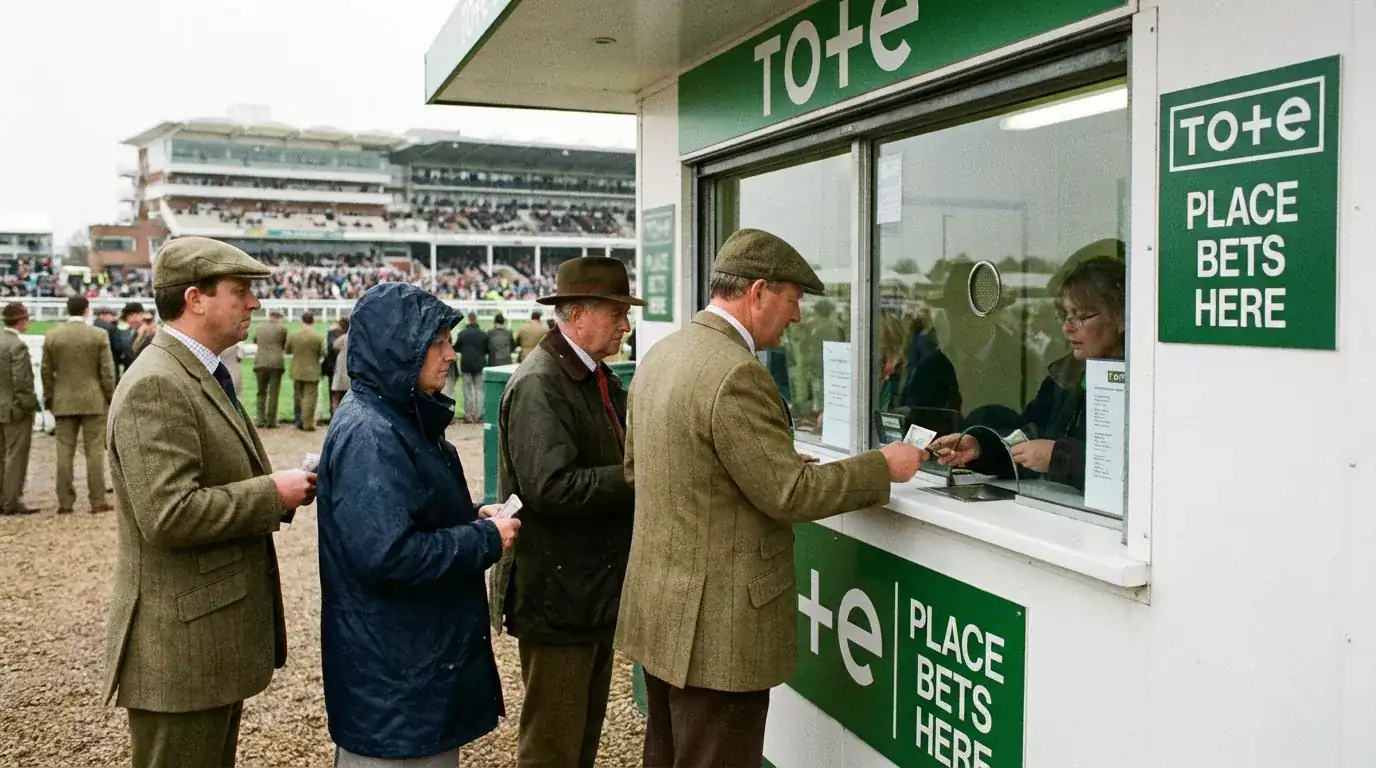
Tote Place Bet vs Fixed Odds in UK Racing
I stood at a Tote window at Haydock a few years back and placed a £10 place bet on a 14/1 shot in a 16-runner handicap chase. The horse finished third. The fixed-odds bookmakers paid 1/4 of the win odds for the place – a straightforward calculation. The Tote paid a place dividend of £4.80 to a £1 stake, nearly 20% more than the fixed-odds return. That gap between the Tote pool and the fixed-odds book is not a fluke. It appears regularly, and understanding when and why it occurs is a genuine edge for place bettors.
The relationship between racing and betting in the UK stretches back over 200 years – the European Commission itself acknowledged this unique interdependency when clearing reforms to the Horserace Betting Levy. The Tote sits at the heart of that history. It is the UK’s only pool betting operator for horse racing, and its place pool works on fundamentally different principles from the fixed-odds place markets offered by traditional bookmakers. Where a bookmaker sets a price and takes the other side of your bet, the Tote collects all place bets into a single pool, deducts a percentage for operating costs, and divides the remainder among winning bettors proportionally. The odds are not known until after the race, because they depend on how much money was bet on each horse across the entire pool.
The UK has 59 licensed racecourses, and the Tote operates at every one of them as well as online. For place bettors, the Tote pool is an alternative marketplace that sometimes – not always, but often enough to matter – delivers better returns than the fixed-odds equivalent.
How the Tote Place Pool Calculates Dividends
The maths behind the Tote place pool is less complicated than people assume, but it behaves in ways that can surprise you if you are used to fixed-odds betting. Let me walk through it.
Every pound staked on the Tote place market goes into a single pool. Before the race, the Tote deducts its takeout – the percentage retained for operating costs and contributions to the racing industry. The takeout on the place pool is typically around 24%, though this varies slightly by pool and by meeting. What remains after the deduction is the net pool.
The net pool is then divided among all the bettors who backed horses that finished in a qualifying place position. The number of places paid follows the same standard UK terms as fixed-odds each-way betting: two places for fields of five to seven, three for eight or more, four for handicaps with sixteen or more runners. The key difference is that the payout per winning unit depends on how much money was staked on each placed horse relative to the total pool.
Here is a simplified example. Suppose the Tote place pool on a 12-runner race collects £100,000 in total stakes. After a 24% deduction, the net pool is £76,000. Three horses qualify for places. If the three placed horses attracted £10,000, £15,000, and £8,000 in place stakes respectively, the dividend for each is calculated by dividing a third of the net pool by the stakes on that horse. So the first placed horse’s dividend is (£76,000 / 3) / £10,000 = £2.53 per £1 staked. The second is £25,333 / £15,000 = £1.69. The third is £25,333 / £8,000 = £3.17.
Notice what happened there. The horse with the least money staked on it returned the highest place dividend. This is the core principle of pool betting: your payout is inversely related to the popularity of your selection within the pool. Backing an unfancied horse to place on the Tote can produce dividends that dwarf the fixed-odds place return.
Tote Place vs Fixed-Odds Place: Key Differences
I keep a log of every place bet I make, split between Tote and fixed-odds, and after thousands of entries the patterns are clear. The two systems produce different results in predictable circumstances, and knowing those circumstances is the entire game.
The first and most important difference is price certainty. With a fixed-odds bookmaker, you know your place payout at the moment you place the bet. The odds are locked in – 8/1 at 1/4 means the place pays 2/1 regardless of what happens to the market. With the Tote, you have no idea what the place dividend will be until after the race. You are betting blind on the payout, which depends on the collective behaviour of every other bettor in the pool.
The second difference is margin structure. A typical bookmaker overround for an average horse race sits between 110% and 125%, and the place market overround tends to be even higher. The Tote’s takeout is a flat percentage – roughly 24% on the place pool. In many races, especially those with large fields and competitive markets, the Tote’s effective margin on individual horses is lower than the bookmaker’s because the pool distributes the deduction evenly rather than loading it onto specific prices. This is particularly true for horses at longer odds, where bookmakers tend to embed the most margin.
Third, the Tote place pool is a zero-sum game among bettors. The total amount paid out to winning bettors is fixed at the net pool amount. If a heavily backed favourite finishes in the places, it absorbs a large share of the pool, leaving less for backers of the other placed horses. Conversely, if favourites miss the places, the pool redistributes more generously to those who backed the placed runners.
Fourth, there is no Best Odds Guaranteed on Tote bets. You get the pool dividend and that is it. There is no mechanism for comparing your Tote return to the SP and receiving the better of the two – that is a fixed-odds feature only.
Scenarios Where the Tote Place Pool Pays More
After years of tracking both systems side by side, three scenarios stand out where the Tote place pool consistently outperforms fixed-odds place returns.
The first is when an unfancied horse places in a race where the pool money is concentrated on a few popular runners. If the first favourite and second favourite both attract 40% of the place pool between them and one of them fails to place, the remaining pool is distributed among the actual placed horses – and if one of those is a longer-priced runner who attracted very little pool money, the dividend can be exceptional. I have seen Tote place dividends on 20/1 shots that exceeded the fixed-odds place return by 30% or more in these situations.
The second scenario is big-field handicaps where the betting market is spread across many runners. In a 24-runner handicap where no single horse dominates the pool, the dividends for placed runners tend to be more generous than in small-field races where two or three horses absorb most of the money. The maths works in your favour because the pool is fragmented – there is more money to redistribute per qualifying place position when the pool is not dominated by a few heavily backed selections.
The third scenario is when the Tote pool is small relative to the fixed-odds market. This happens at lower-profile midweek meetings where the Tote pool might be £20,000 while the fixed-odds market turns over ten times that amount. Small pools can produce volatile dividends – sometimes much better than fixed odds, sometimes worse. The opportunity exists precisely because fewer bettors are competing for the pool, and a shrewd place bet on a lightly backed runner can capture a disproportionate share.
The flip side deserves equal attention. The Tote place pool tends to underperform fixed odds when heavily backed favourites finish in the places. If the 6/4 favourite attracts a huge share of the place pool and finishes second, its Tote dividend is depressed because so many bettors are sharing a limited pot. In that scenario, the fixed-odds return at 1/4 or 1/5 of 6/4 is usually better. My rule of thumb: the Tote place pool rewards contrarian thinking and punishes following the crowd. If your approach to place betting in UK racing leans toward backing horses at bigger prices, the Tote pool is worth factoring into your decision on where to place the bet.
Are Tote place dividends declared before or after the race?
After the race. Tote dividends are calculated once all bets are in and the result is confirmed. You do not know your place payout until the dividend is declared, which typically happens within a few minutes of the result being finalised. This is the fundamental difference from fixed-odds place bets, where your payout is locked in at the moment of bet placement.
Can I use the Tote place pool for each-way bets?
The Tote does not offer a traditional each-way bet in the same format as fixed-odds bookmakers. Instead, you can place separate win and place bets through the Tote, each into its own pool. The win pool and place pool are independent, so you would need to place two separate bets to replicate the structure of an each-way wager. Some Tote products bundle these together for convenience, but the underlying mechanism is always two distinct pool bets.
Published by the win Place bet Horse Racing team.