Jump Racing Each-Way: UK National Hunt Value
 Available in US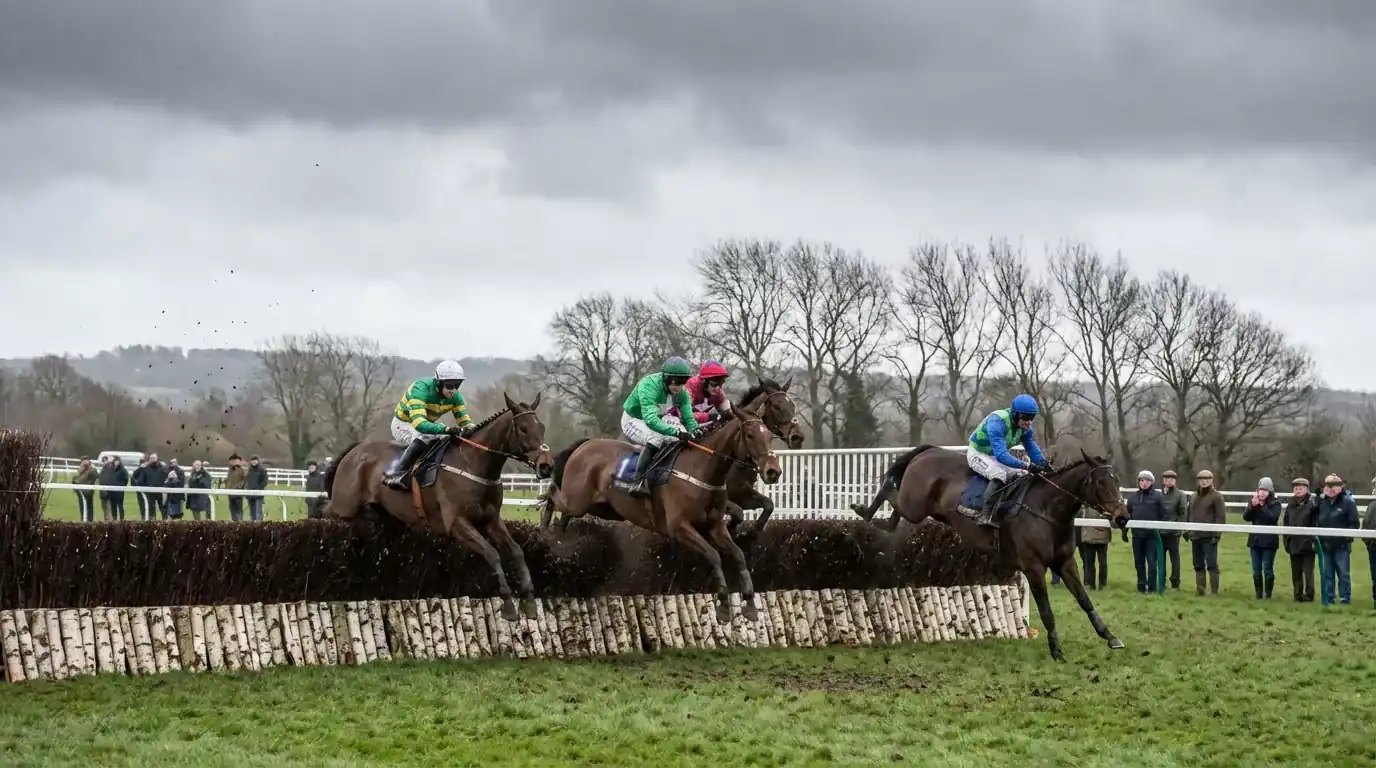
National Hunt Place Betting Value UK
The moment a horse clips the top of a hurdle at Cheltenham, stumbles on landing, and ejects its jockey into the turf – that is the moment the each-way maths shifts in your favour. Not because you wished ill on anyone, but because every horse that fails to complete a jump race is one fewer competitor for the paid places. National Hunt racing is the only code where the field actively shrinks during the race, and that structural feature makes it the richest territory for each-way betting in the UK.
Favourites in British horse racing win approximately 30 to 35% of the time across all race types. But in jump racing, the figure sits closer to the lower end of that range, and in certain categories – novice chases, long-distance handicap hurdles, cross-country events – the favourite’s win rate drops below 25%. When the market leader fails to win two-thirds of the time or more, the horses filling the places behind come from deeper in the betting. That is the fundamental reason each-way betting at longer odds works better over jumps than on the Flat.
Falls, Unseats, and Pulled Up: Attrition Creates Place Opportunities
Over the 2020 to 2025 period, fewer than half of odds-on favourites were successful at Cheltenham – just 16 of 35 winning. If the best-fancied horses in the best races at the premier venue cannot win half the time when sent off at cramped odds, the implications for the place market are obvious: outsiders are finishing in the frame regularly, and the attrition rate is a primary driver.
Jump racing attrition comes in three forms. Falls are the most dramatic – a horse hits the ground and its race is over. Unseats occur when the horse stays on its feet but the jockey does not. Pulled up means the jockey has decided the horse is not travelling well enough, not jumping well enough, or is too far behind to continue safely. Each of these outcomes removes a runner from the race after the start, improving the mathematical chance that the surviving runners finish in the places.
The attrition rate varies by race type. Novice chases have the highest incidence of falls and unseats, because the horses are learning to jump the larger fences. Handicap hurdles have a moderate rate, mostly from horses being pulled up when outpaced. Long-distance chases – the Grand National being the extreme example – combine demanding fences with stamina tests that cause late fallers and tired horses to pull up in the final mile.
For each-way bettors, attrition is a hidden variable that boosts the effective probability of a place finish beyond what the pre-race odds imply. If a 16-runner race has three horses fail to complete, the thirteen finishers are competing for four paid places. That is nearly a 31% qualification rate instead of the 25% implied by 4/16 at the start. The odds you took were priced against a 16-runner field; the actual place competition was against thirteen. That gap between implied probability and actual probability is a structural edge for each-way punters in jump racing.
National Hunt Field Sizes and Place Term Ranges
Jump racing’s programme delivers larger average field sizes than Flat racing, and that translates into more generous place terms as a standard feature of the winter calendar.
Handicap hurdles and handicap chases at the major meetings regularly attract 12 to 24 runners, triggering three-place or four-place terms depending on whether the field reaches sixteen. Novice hurdles average 10 to 14 runners. Novice chases sit between 6 and 12, though festival novice chases can stretch to 14 or more. Conditions chases and graded events typically produce 6 to 10 runners.
The sweet spot for each-way betting is the handicap hurdle with 16 or more runners. These races pay four places, attract competitive fields where the form is open, and produce enough attrition to boost the effective place probability. I target these races throughout the National Hunt season, from the early autumn meetings at Chepstow and Wetherby through to the spring festivals at Cheltenham, Aintree, and Punchestown. The consistency of each-way opportunities across the jumps calendar is one of its biggest advantages over the Flat, where comparable field sizes are concentrated in a handful of summer festivals.
Hurdle Races vs Chases: Which Offers Better Each-Way Value?
This is a question I get asked at least once a week during the winter, and my answer always depends on what kind of each-way bettor you are.
Hurdle races offer larger fields, more runners completing the race, and more predictable form. The attrition rate is lower than in chases because hurdles are smaller obstacles that horses rarely fall at. A 20-runner handicap hurdle might see 17 or 18 finish – a high completion rate, but still a reduction from the original field that helps each-way bettors. The form in big-field hurdle handicaps is readable but competitive, and the class gaps are narrow enough that horses at 14/1 to 25/1 finish in the places regularly. If you want volume and consistency from your each-way approach, hurdle handicaps are the primary hunting ground.
Chases, particularly novice chases, offer a different proposition. Fields are typically smaller (8 to 12 runners), but the attrition rate is much higher. A novice chase with 10 starters might see only 6 or 7 finish, meaning three paid places from six or seven completers is almost a coin flip for any horse that stays on its feet. The each-way value in novice chases is not about backing outsiders in huge fields – it is about identifying horses with sound jumping technique at mid-range prices (6/1 to 12/1) and relying on the attrition to improve their place probability.
My own portfolio splits roughly 60/40 between hurdles and chases during the jumps season. The hurdle handicaps provide the volume of each-way bets that keeps the system ticking. The novice chases and smaller-field graded chases provide occasional high-value each-way strikes when the attrition factor works in my favour. The blend works because the two race types deliver different each-way dynamics from the same underlying principle: jump racing reduces the effective field, and the each-way bettor benefits every time a rival fails to complete.
Do fallers affect place terms after the race has started?
No. Place terms are fixed at the start of the race based on the number of runners that go to post. If 16 runners start a handicap, four places are paid regardless of how many horses complete the race. Horses that fall, unseat, or are pulled up do not change the place terms – they simply reduce the number of competitors for those places, which is why attrition works in favour of each-way bettors.
Why do novice chases often produce place value at higher odds?
Novice chases have the highest attrition rate in jump racing because the horses are learning to jump the larger fences. Falls and unseats eliminate a significant proportion of the field during the race, meaning the horses that stay upright face less competition for the paid places than the original field size implies. A horse at 10/1 in a 10-runner novice chase where three horses fail to complete is effectively competing for places against six other finishers – a much more favourable probability than the starting odds suggest.
Created by the ”win Place bet Horse Racing” editorial team.