Horse Racing Odds Place Bet: UK Betting Maths
 Available in US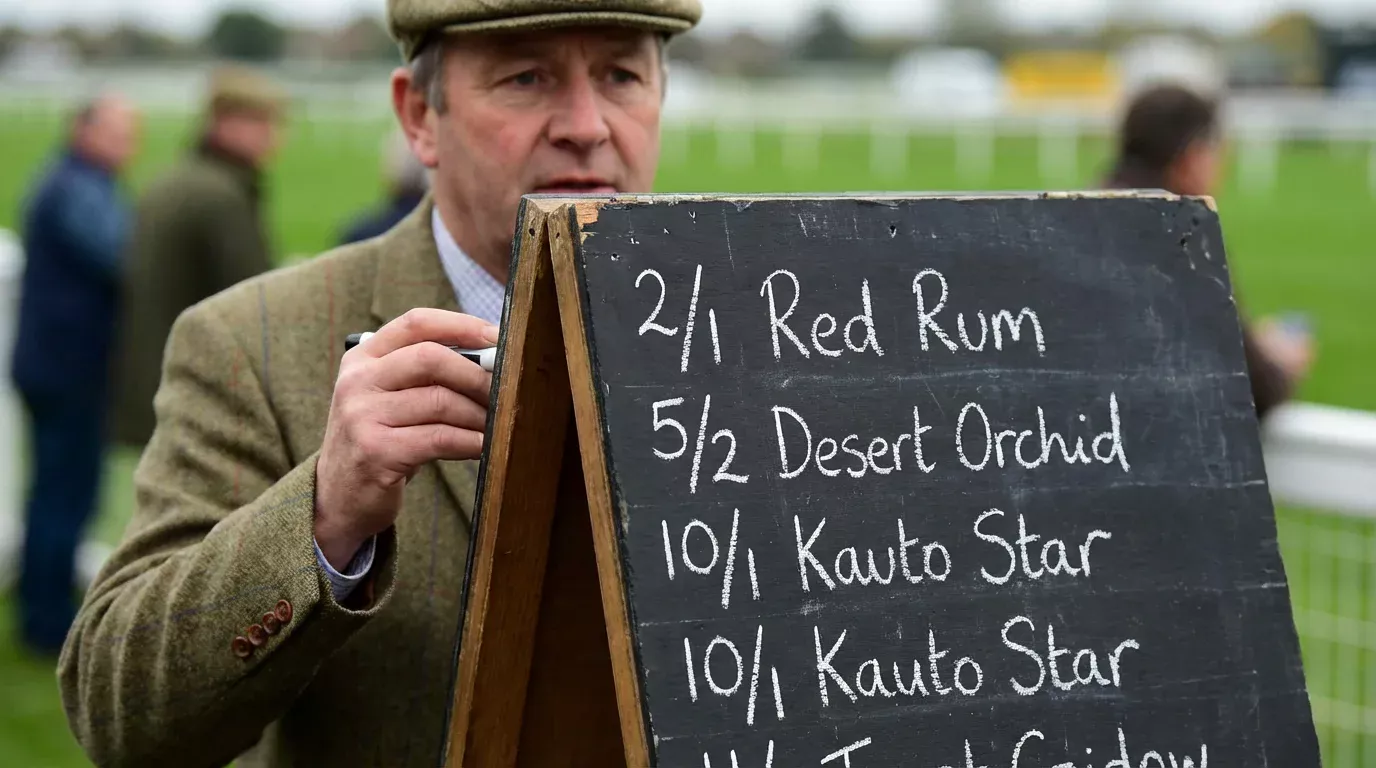
Reading Fractional and Decimal UK Racing Odds
I spent my first afternoon at the races pretending I understood what 11/4 meant. I knew it was better than 2/1 but I could not have told you by how much, and when someone mentioned the each-way terms were 1/4 odds I nodded as though that explained everything. It did not. Horse racing can be enjoyed as an intellectual challenge, and the first intellectual challenge is decoding the numbers that determine how much you stand to win.
Each-way betting represents approximately 22% of the UK horse racing market, and every one of those bets depends on the punter understanding two sets of odds: the win odds and the place odds. The win odds are displayed on the bookmaker’s board or app. The place odds are derived from the win odds by applying a fraction specified in the each-way terms. If you cannot read the first, you cannot calculate the second – and without both, you are betting blind.
Fractional Odds: The UK Default Format
Fractional odds are the traditional format used by UK bookmakers, both on-course and online. They express the profit you receive relative to your stake. At 5/1, you receive £5 profit for every £1 staked. At 11/4, you receive £2.75 profit per £1. At 1/2, you receive 50p profit per £1.
Reading fractional odds becomes intuitive once you understand the structure: the first number is the profit, the second is the stake. Divide the first by the second to get the profit per pound. 7/2 = 3.5, so £3.50 profit per £1 staked. 9/4 = 2.25, so £2.25 per £1. 100/30 (sometimes displayed as 100-30) = 3.33, so £3.33 per £1.
Odds-on prices flip the relationship: the second number is larger than the first, meaning you stake more than you stand to profit. At 4/5, you stake £5 to profit £4. At 1/3, you stake £3 to profit £1. Odds-on prices are common on favourites in small-field races and they matter enormously for place betting, because the place fraction of an odds-on price is extremely small.
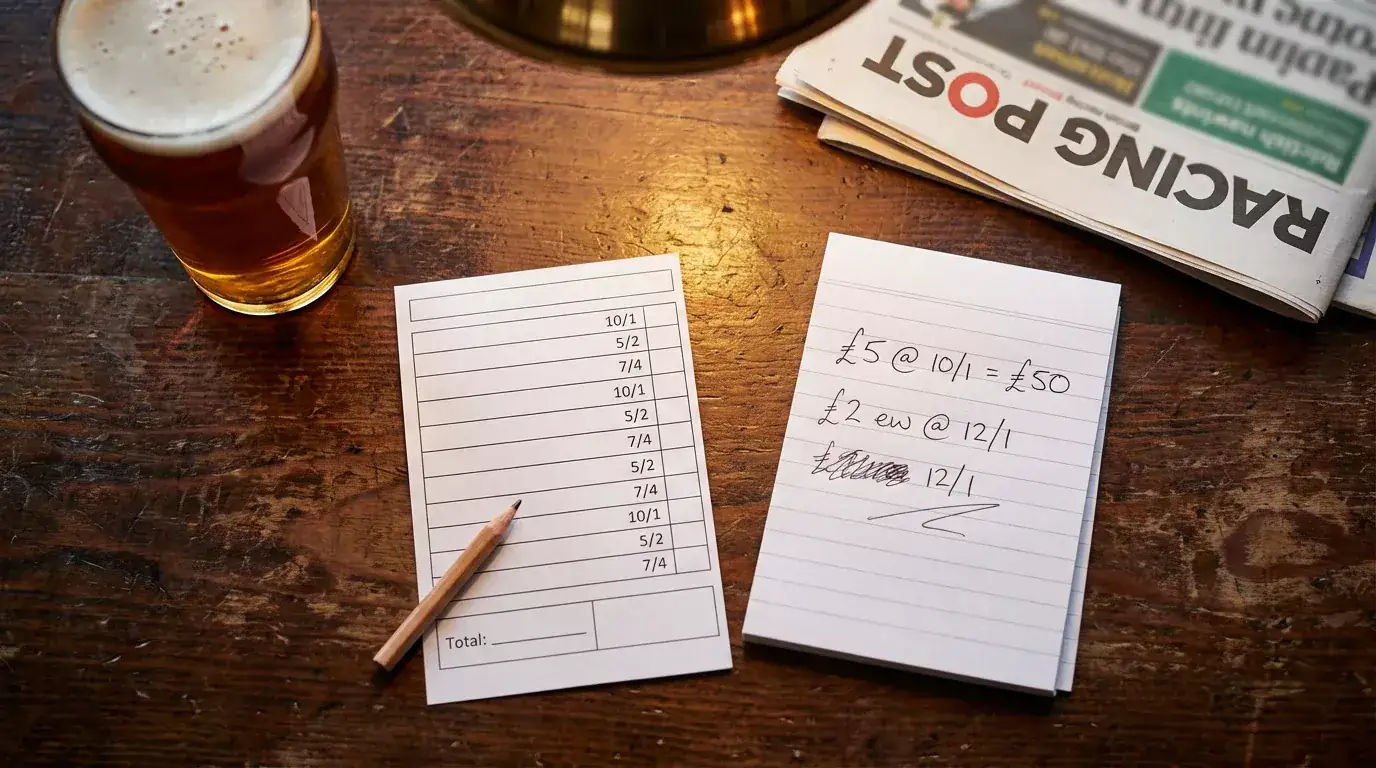
One quirk of fractional odds that trips up newcomers: the total return includes your stake back. If you bet £10 at 5/1, your total return is £60 – that is £50 profit plus your £10 stake. The odds describe only the profit component. Every payout figure I discuss includes the distinction between profit and total return, because conflating the two is a common source of confusion when calculating each-way payouts.
Decimal Odds and How to Switch Between Formats
Decimal odds are the alternative format, widely used in Europe and increasingly popular on UK apps where users can toggle between formats. Decimal odds express the total return per £1 staked, including the stake. At decimal 6.0, a £1 bet returns £6 total (£5 profit + £1 stake). At decimal 3.75, it returns £3.75 (£2.75 profit + £1 stake).
Converting between the two is straightforward. Fractional to decimal: divide the first number by the second and add 1. So 5/1 = (5/1) + 1 = 6.0. And 11/4 = (11/4) + 1 = 3.75. Decimal to fractional: subtract 1 and express as a fraction. So 4.5 decimal = 3.5 = 7/2. And 2.25 decimal = 1.25 = 5/4.
For place bet calculations, decimal odds are actually easier to work with. The place payout in decimal terms is: (win decimal odds – 1) / place fraction + 1. At win odds of 6.0 decimal with 1/4 place terms: (6.0 – 1) / 4 + 1 = 5/4 + 1 = 2.25. A £10 place stake returns £22.50 total. The formula looks complex written out, but on a calculator it takes three seconds.
I use decimal odds for all my place-bet calculations because the arithmetic is cleaner. When I am standing in the betting ring looking at fractional prices, I mentally convert to decimal before deciding whether the each-way terms make the bet worthwhile. The conversion becomes automatic after a few weeks of practice.
From Win Odds to Place Payout: Reading the Each-Way Fraction
This is where odds literacy directly affects your bottom line. The each-way fraction – 1/4 or 1/5 of the win odds – determines what you get paid if your horse places but does not win. Getting comfortable with this calculation is non-negotiable for anyone betting each-way regularly.
A typical bookmaker overround for an average horse race sits between 110% and 125%, and that overround applies to the win market. The place market carries an additional implicit overround through the fraction mechanism. At 1/4 odds, the bookmaker is paying you one quarter of the win price for a place finish. At 1/5, they pay one fifth. The difference between 1/4 and 1/5 on the same horse at the same win price is pure profit margin for the operator – and pure cost for you.
Here is the practical calculation. Your horse is 8/1 to win. Each-way terms are 1/4 odds for three places. The place odds are 8/4 = 2/1. A £5 place stake at 2/1 returns £10 profit plus £5 stake = £15. Now change the terms to 1/5: place odds are 8/5. A £5 stake returns £8 plus £5 = £13. The difference – £2 on a single £5 place stake – adds up across a season of betting.
At longer odds, the gap widens dramatically. At 20/1 win odds: 1/4 place = 20/4 = 5/1 (£25 profit per £5 staked). 1/5 place = 20/5 = 4/1 (£20 profit per £5 staked). That is a £5 difference per bet on the place leg alone. Over fifty each-way bets in a season, the cumulative impact of 1/4 versus 1/5 terms is significant enough to justify checking the fraction before every bet and shopping between bookmakers that offer different terms.
My habit: I always note the each-way fraction before the odds. A horse at 10/1 with 1/4 terms (place odds 5/2) is a better each-way proposition than the same horse at 10/1 with 1/5 terms (place odds 2/1). The win price is identical; the place value is not. This distinction is invisible to anyone who does not understand how each-way fractions translate into actual payouts, and it is one of the simplest edges available to the informed place bettor.
Do fractional and decimal odds always give the same place payout?
Yes, provided you convert correctly. Fractional and decimal are two ways of expressing the same price. A horse at 5/1 fractional is 6.0 decimal, and the place payout at 1/4 terms is identical in both formats: 5/4 fractional = 2.25 decimal. The only difference is the display format. If you see a discrepancy between the two on a betting app, it is usually a rounding issue in the decimal display rather than a genuine difference in the price.
What does SP mean on my bet slip and how does it affect place returns?
SP stands for Starting Price – the official odds of a horse at the moment the race starts, as determined by the on-course betting market. If you bet at SP, both the win and place parts of your each-way bet are settled at the starting price rather than at a fixed price you chose earlier. SP bets do not qualify for Best Odds Guaranteed, because BOG only applies when you have taken a fixed price that can be compared to the SP. Your place return at SP is calculated by applying the each-way fraction to whatever the starting price turns out to be.
Written by the editors at win Place bet Horse Racing.