Dead Heat Rules Each-Way Bet: UK Shared Payouts
 Available in US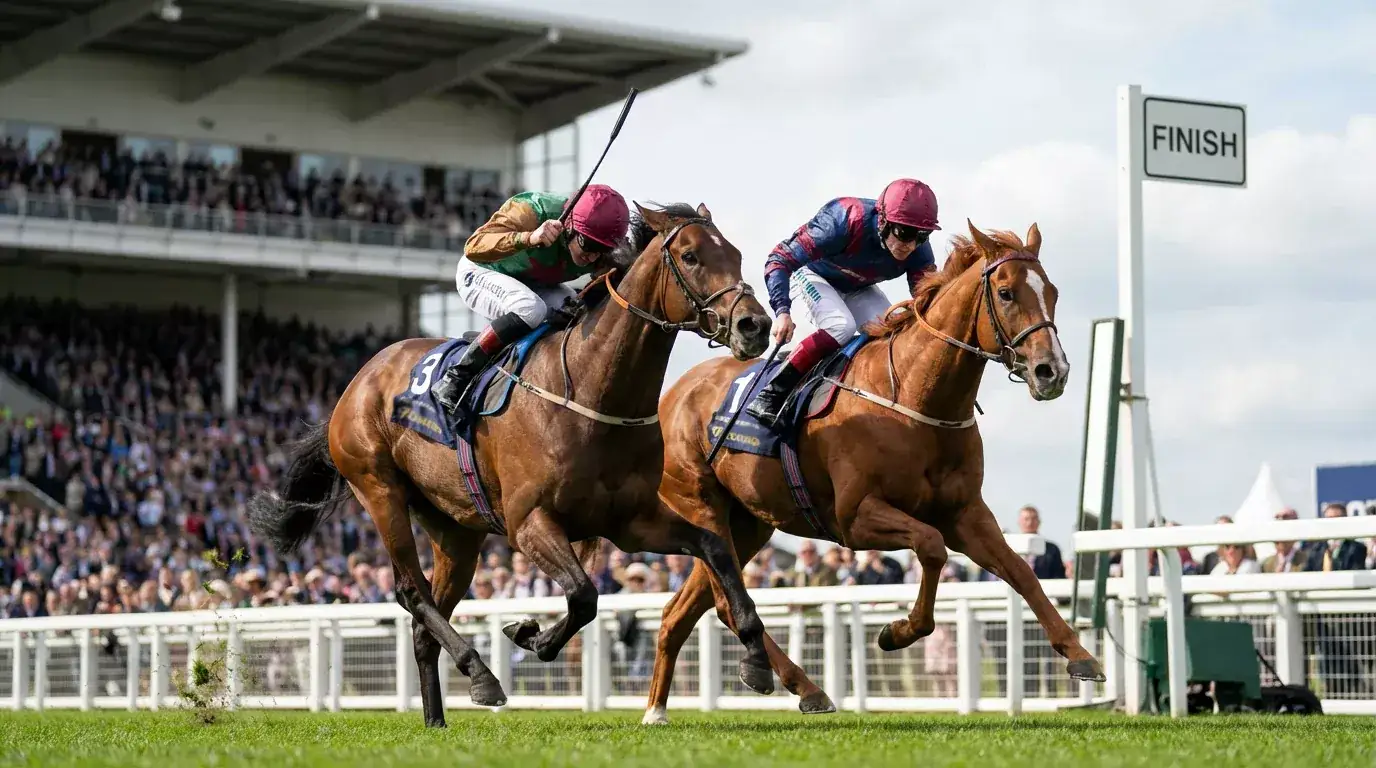
Shared Place Payouts Under UK Dead Heat Rules
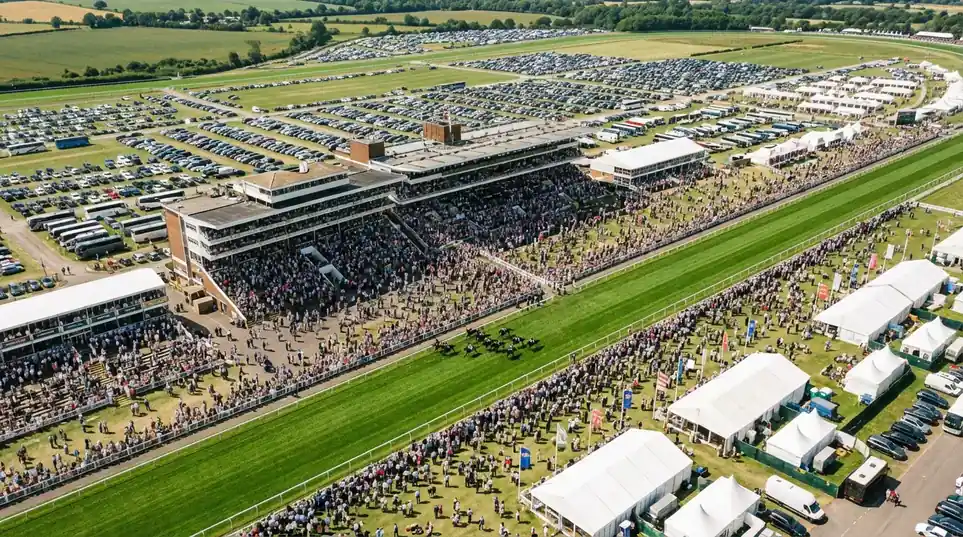
The photo-finish camera at Ascot flashed, and the judge called a dead heat for second place. I had backed one of the two horses involved, each-way at 12/1. My first thought was celebration – the horse had placed. My second thought, when I checked my return, was confusion. The payout was roughly half what I expected for a straightforward place finish. That was my introduction to dead-heat rules, and it is a lesson that sticks once you have experienced it with real money on the line.
Dead heats in horse racing happen more often than casual bettors realise. They can occur for any finishing position – two horses crossing the line together for first, or three horses inseparable for third. When a dead heat involves a place position, it directly impacts the payout on any place or each-way bet. Each-way betting accounts for approximately 22% of the UK horse racing betting market, and any bettor placing each-way wagers regularly will eventually encounter a dead heat that affects their return.
The rule itself is simple in principle: when two or more horses share a finishing position, your bet is settled as if you had staked a fraction of your original wager at the full odds. The fraction depends on how many horses are involved in the dead heat. Two horses sharing a position means half your stake is settled as a winner and half is treated as a loser. The result feels like being paid at half odds, even though the mechanism is slightly different.
The Dead-Heat Rule in UK Horse Racing Betting
Why does the dead-heat rule exist at all? The answer lies in the structure of place betting. A race with three paid places has three qualifying positions. If four horses effectively tie for those positions, someone has to absorb the cost. Bookmakers cannot pay full place returns to more horses than there are places available without losing money on the market. The dead-heat rule is the agreed mechanism for splitting the payout equitably.
Formally, when a dead heat occurs for any position, each horse involved is deemed to have dead-heated, and bets on those horses are settled at full odds to a proportionally reduced stake. In a two-way dead heat, your stake is halved: half is settled as a winning bet at the full odds, and the other half is a losing bet. In a three-way dead heat, your stake is divided by three: one third wins at full odds, two thirds lose.
This applies to win bets and place bets independently. If your horse dead-heats for first place, the win leg of your each-way bet is subject to the dead-heat reduction. If your horse dead-heats for a place position, the place leg is reduced. And yes, it is possible for both legs to be affected simultaneously if there is a dead heat for first place and your horse is one of the joint winners – the win leg is halved, and the place leg pays in full because the horse unambiguously finished in the places.
The critical scenario that catches people is when a dead heat occurs for the last qualifying place position. Suppose a race pays three places and there is a dead heat for third. Two horses share third, meaning there are effectively four horses “in the places” but only three paid positions. Your horse is one of the dead-heaters for third. The place leg of your each-way bet is settled at half your stake, full place odds. The bookmaker is sharing the third-place payout between the two horses that occupy it.
Dead Heats for a Place Position: The Halving Effect
The financial impact of a dead heat for a place position depends on the odds of your selection and the place terms. At short odds, the halving effect is annoying but manageable. At longer odds, it can slash a substantial payout in half.
Consider a horse at 6/1 with place terms of 1/4 odds. A normal place finish returns 6/4 (1.5/1) profit on your place stake, plus the stake back. If there is a two-way dead heat for the relevant place position, half your place stake wins at 6/4 and half loses. On a £10 place stake: £5 x 1.5 = £7.50 profit, plus £5 stake returned on the winning half = £12.50 total return. You lose the other £5. So from a £10 place stake, you get back £12.50 instead of £25. That is a 50% reduction in total return.
Now picture the same dead heat on a 20/1 shot at 1/4 place odds. Normal place return: £10 x 5/1 = £50 profit plus £10 = £60. Dead-heat return: £5 x 5/1 = £25 profit plus £5 = £30. You have lost £30 compared to the full payout – that is the price of sharing a place position at bigger odds.
The halving effect hits hardest on each-way bets at long odds where only the place leg is live. If your 20/1 shot finishes third in a dead heat and the win leg has already lost, you are left with £30 return on a £20 total each-way outlay (£10 win + £10 place). A net profit of £10 instead of £40. Still a profit, but a fraction of what you expected when the horse crossed the line alongside another.
Worked Example: Dead Heat on a 10/1 Each-Way Bet
Let me run through a full each-way dead-heat scenario with concrete numbers, because this is where the confusion usually lives.
You back a horse at 10/1 each-way, £5 each way (£10 total stake), in a 10-runner race with standard place terms of 1/4 odds for three places. Your horse finishes in a two-way dead heat for third place. First and second were decided cleanly – no dead heat there.
The win leg: your horse did not win, so the £5 win stake is lost. No dead-heat complication on this leg.
The place leg: your horse finished in the places (third), but in a dead heat. The dead-heat rule halves your place stake. Half of £5 = £2.50 is settled as a winning place bet. The other £2.50 is lost. The winning half pays at the full place odds: 10/4 = 2.5/1. So £2.50 x 2.5 = £6.25 profit, plus £2.50 stake returned = £8.75.
Total return: £8.75. Total outlay: £10. Net result: a loss of £1.25.
Without the dead heat, the place leg would have paid: £5 x 2.5 = £12.50 profit plus £5 = £17.50 return. Net result on the full each-way bet: £17.50 – £10 = £7.50 profit. The dead heat has turned a £7.50 profit into a £1.25 loss. That swing is why dead heats for place positions are among the most frustrating outcomes in each-way betting.
There is no way to predict or hedge against dead heats. They are an inherent risk of place betting, and the only practical response is to understand the maths so that you can assess the damage accurately rather than being surprised by a short return. I factor dead-heat risk into my expected value calculations on each-way bets by acknowledging that a small percentage of place finishes will be shared – it is one of the reasons I slightly discount the theoretical place strike rate when building a systematic place betting approach.
Can a dead heat affect the win part and the place part of the same bet differently?
Yes. If your horse dead-heats for first place, the win leg is subject to the dead-heat reduction (half your win stake wins at full odds), but the place leg pays in full because the horse unambiguously finished in the places – it does not matter whether it was first or joint first for place purposes. Conversely, if your horse wins outright but dead-heats for a place position due to a complex finishing order, the win leg pays normally and the place leg is reduced. Each leg is assessed independently.
How does a three-way dead heat for second place change the each-way payout?
In a three-way dead heat for second, three horses share one place position. Your place stake is divided by three: one third is settled as a winning bet at full place odds, and two thirds are lost. On a £9 place stake at place odds of 2/1, only £3 would be the winning portion – returning £3 x 2 = £6 profit plus £3 stake = £9 on the winning third, while the remaining £6 is lost. Total place return is £9 from a £9 place stake, meaning you break even on the place leg. At shorter place odds, a three-way dead heat almost always results in a net loss on the place portion.
Written by the editors at win Place bet Horse Racing.