Royal Ascot Place Betting: UK Each-Way Angles
 Available in US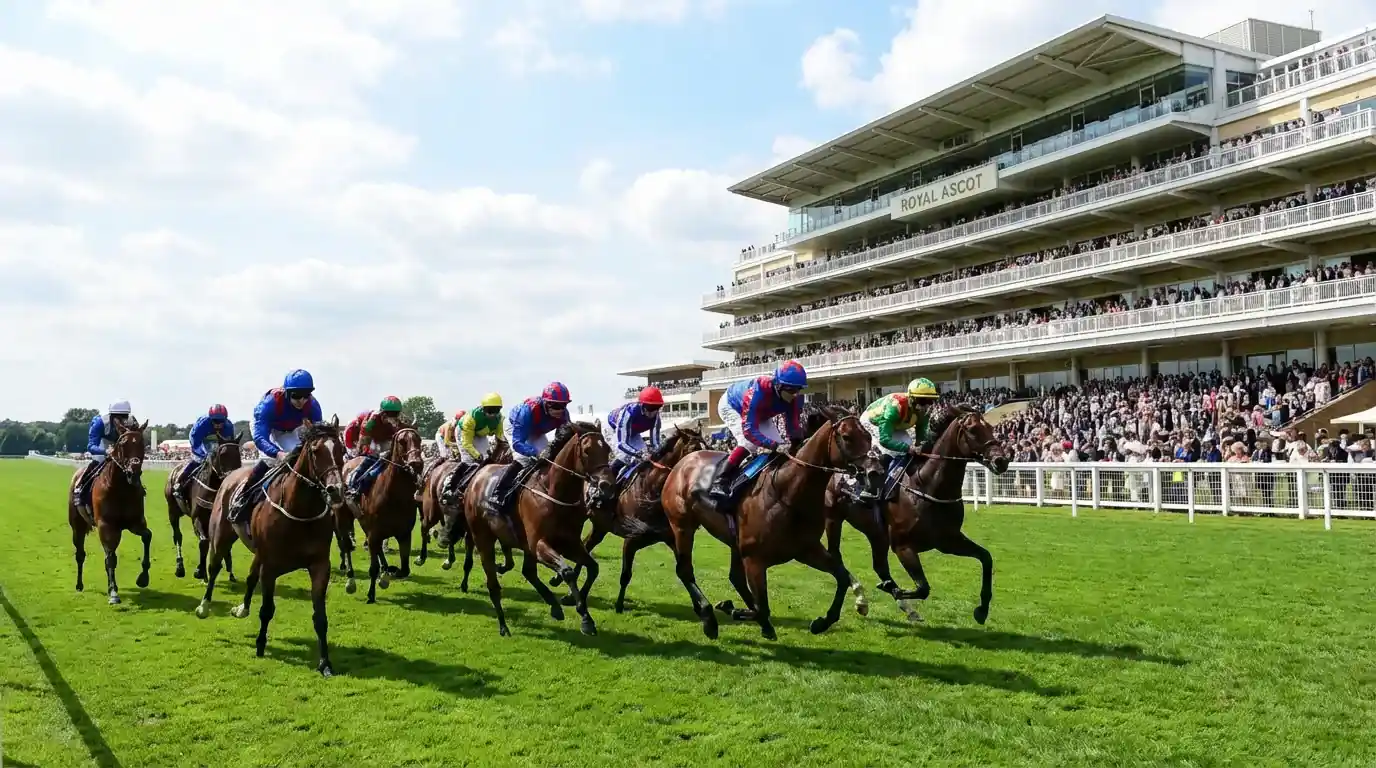
Royal Ascot Handicap Place Terms UK
Royal Ascot is the meeting that forces you to switch your each-way brain on and off between races. At 2:30 you might be watching a six-runner Group 1 where each-way barely makes sense, and by 3:05 you are staring at a 30-runner handicap where four or five paid places turn the race into an each-way lottery with real structural value. No other fixture on the Flat demands this kind of tactical flexibility from place bettors.
UK racecourse attendance topped five million in 2025, and a sizeable share of that total passes through the Ascot gates during the five days in June. The meeting draws enormous betting volume – the combination of prestige, field quality, and huge handicaps makes it the Flat season’s equivalent of Cheltenham for each-way punters. But the approach needs to be sharply different, because Flat racing at this level produces different form patterns, different field dynamics, and different each-way opportunities from anything you encounter over jumps.
Place Terms Across Royal Ascot Race Types
Each-way betting accounts for roughly 22% of the entire UK horse racing betting market, and at Royal Ascot the proportion climbs higher during the big handicap races. Understanding which races offer which place terms is the foundation of any sensible Ascot each-way strategy.
Group 1 races – the King’s Stand, the Queen Anne, the Gold Cup, the Commonwealth Cup, the Coronation Stakes, the Diamond Jubilee – typically attract fields of eight to fourteen runners. Standard terms apply: three places at 1/4 or 1/5 odds. These fields are smaller and more predictable than the handicaps, dominated by proven Group performers with established form lines. Each-way value in Group 1 races at Ascot exists, but it is narrower. You are looking for a horse at 8/1 or longer that has a genuine place chance against the principals – not a common find when the market leaders have been winning Group races all season.
The heritage handicaps are where Ascot’s each-way market comes alive. The Royal Hunt Cup (one mile), the Wokingham Stakes (six furlongs), the Buckingham Palace Stakes (seven furlongs), and the Duke of Edinburgh Stakes (a mile and a half) regularly field 20 to 30 runners. At 16+ runners in a handicap, standard terms expand to four places. Most bookmakers add extra places on these marquee handicaps – five, six, or even seven paid positions are common. With fields this large and place terms this generous, the each-way maths tilts decisively in favour of longer-priced selections.
The conditions races and listed events sit in the middle: fields of 10 to 16, three places as standard, occasionally stretching to four. The Coventry Stakes and the Norfolk Stakes (both for two-year-olds) can produce value each-way opportunities because juvenile form is less reliable, creating more scope for surprises at bigger odds.
Place Betting in Group Races: Small Fields, Tight Margins
I learned an expensive lesson about Group-race each-way betting in my early years at Ascot. I backed a horse at 5/1 each-way in a nine-runner Group 1, and it finished fourth – one spot outside the three paid places. The place return at 5/4 would have been modest anyway, barely covering the total each-way outlay. That made me reconsider whether each-way is even the right structure for short-to-mid-priced selections in small-field Group races.
The issue is mathematical. In a nine-runner Group 1 where three places are paid, you need your horse to finish in the top third. If the horse is priced at 5/1, the market implies roughly a 16% chance of winning. The place probability is higher – perhaps 40% to 45% for a top-three finish. But the place payout at 1/4 of 5/1 is just 5/4, meaning a £10 place stake returns £12.50 profit plus stake. On a £20 total each-way outlay, a place-only finish returns £22.50 – a net profit of £2.50. That is a thin margin for a bet that still loses more often than it wins.
The each-way case in Group races strengthens only at longer odds. A 14/1 shot placing in a Group 1 at 1/4 odds returns 14/4 = 7/2 on the place stake. On a £10 each-way bet, that is £17.50 profit plus £5 stake on the place leg, totalling £22.50 against a £10 total outlay. Now you are looking at genuine value – but horses at 14/1 in Group 1 company are outsiders for a reason, and the strike rate is low.
Royal Ascot Handicap Each-Way: Where the Value Sits
The handicaps are my primary each-way target at Royal Ascot, and the data supports this approach convincingly. Large fields, compressed handicap marks, and the unique characteristics of the Ascot track combine to produce results that reward the each-way bettor more consistently than the small-field pattern races.
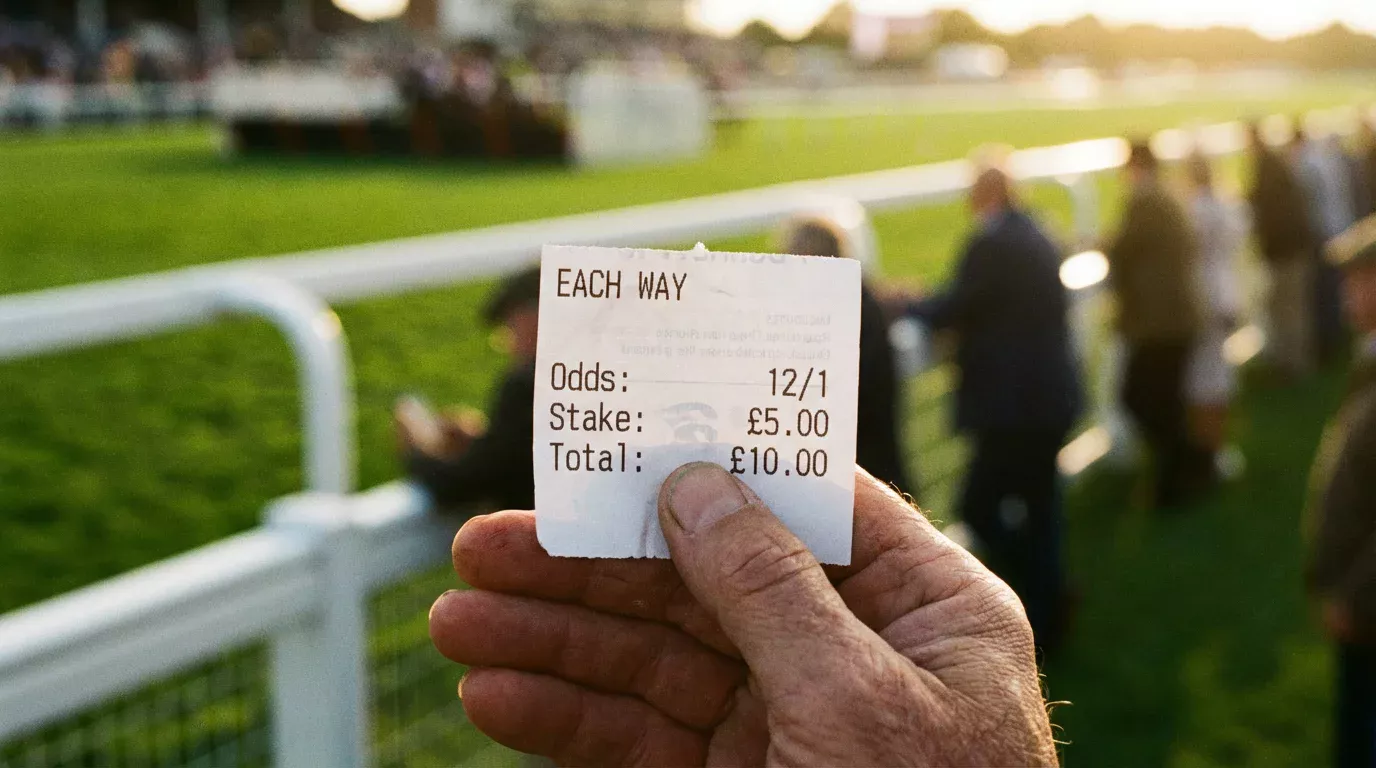
The Royal Hunt Cup is the centrepiece. Thirty runners, a straight mile, and a betting market where half the field is priced between 12/1 and 33/1. With bookmakers typically paying five or six places on the Hunt Cup, the each-way proposition is structurally similar to the Grand National: you are looking for a horse that can finish in the first five or six from a vast field where the pace is frenetic and the draw plays a significant role. I focus on horses drawn in proven stalls positions for the prevailing ground conditions, priced at 16/1 or longer, with recent form that suggests they are well handicapped. The place leg at 1/4 of 16/1 returns 4/1 on the place stake – enough to cover the total each-way outlay comfortably.
The Wokingham follows a similar template but over the sharp six furlongs of Ascot’s straight course. Sprint handicaps are notoriously unpredictable, and the Wokingham is the most unpredictable of them all. Draw bias is even more pronounced over six furlongs, and the race often splits into two or three groups across the width of the track. Each-way bets on horses drawn on the favoured side at 20/1 or longer have produced some of the best returns I have logged at the meeting.
My approach across all Ascot handicaps follows a simple framework: identify the races with 20+ runners and enhanced place terms, filter for horses at 14/1 or longer with a draw advantage and recent competitive handicap form, and place each-way bets where the place leg alone justifies the total stake. The win leg is a bonus. The place leg is the business, and at Royal Ascot the generous place terms on big handicaps make that business viable across the full five days.
How many places are paid in the Royal Hunt Cup and Wokingham?
Standard place terms for handicaps with 16 or more runners pay four places. Both the Royal Hunt Cup and the Wokingham typically attract 20 to 30 runners, so four places is the minimum. Most major bookmakers enhance these terms further, paying five, six, or even seven places on these flagship Ascot handicaps. The exact number of places and the odds fraction (1/4 or 1/5) vary by bookmaker, so compare the terms before betting.
Should I bet each-way on short-priced Group 1 favourites at Ascot?
Generally not. The place payout on a short-priced favourite is small – a 2/1 shot placing at 1/4 odds returns just 1/2 on the place stake, barely covering the total each-way outlay. Each-way makes sense in Group 1 races only when you are backing a horse at 8/1 or longer, where the place return becomes meaningful relative to the total stake. If you fancy the Group 1 favourite, a straight win bet is a more efficient use of your money.
Written by the editors at win Place bet Horse Racing.