Place Only Betting UK: Horse Racing Markets
 Available in US
Place-Only Betting Fundamentals in UK Racing
For years I placed each-way bets without questioning the structure – a win leg and a place leg, always paired, always doubling my stake. Then one afternoon at Kempton I realised I had no genuine expectation that my 14/1 shot would win. I just wanted it to place. The win leg was dead money, a £10 contribution to the bookmaker’s margin that I was paying out of habit rather than conviction. That was the day I started exploring place-only betting – and it changed how I think about staking.
Horse racing betting can be enjoyed as an intellectual challenge, and the decision between place-only and each-way is one of those intellectual puzzles that rewards clear thinking. Each-way betting dominates the UK market – roughly 22% of all racing wagers are each-way – but a growing number of punters are realising that the each-way structure is not always the most efficient way to back a horse you believe will finish in the places but probably will not win.
Where to Find Place-Only Markets in the UK
Place-only betting is not as widely available as each-way, and that is part of the reason it is underused. Traditional high-street bookmakers generally do not offer a standalone place bet over the counter. Their system is built around win bets and each-way bets, and a request for “place only” at a betting shop counter can draw a blank look.
Online, the landscape is different. Betting exchanges, most notably Betfair, offer dedicated place markets on horse races. You can back a horse to place at odds set by the market, entirely independent of the win odds. The exchange place market operates alongside the win market but with its own separate book, its own prices, and its own liquidity. The odds available on the exchange place market are genuine market prices, not derived from the win odds by applying a fraction.
Some fixed-odds bookmakers also offer place-only betting on selected races, particularly the bigger events. This option usually appears as a separate market alongside the win and each-way options on the race page. The odds are set by the bookmaker’s traders rather than derived mechanically from the win price, which means they can be either better or worse than the place fraction you would receive on an each-way bet.
The key point: if you want to bet place-only, you need to actively seek out the market. It will not appear by default on most bookmaker interfaces, and you may need to scroll past the standard win and each-way options to find it. On exchanges, navigate to the place market tab rather than the win market – they are distinct.
Place-Only vs Each-Way: Odds and Staking Compared
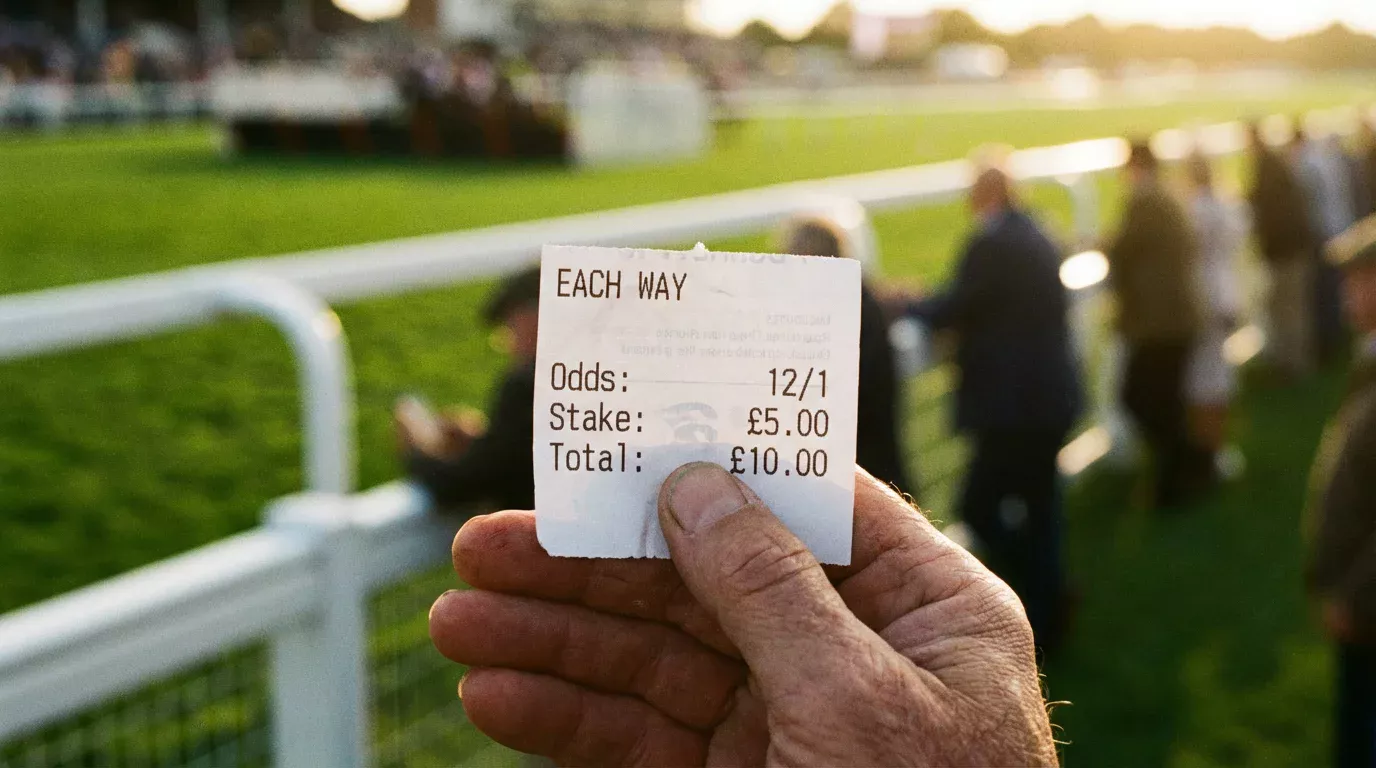
The staking difference is the first thing most punters notice. An each-way bet costs double your unit stake – £10 each way means £20 total. A place-only bet costs exactly what you stake: £10 place-only is £10 total. For the same total outlay, you can stake twice as much on the place leg by going place-only instead of each-way.
A typical bookmaker overround for an average horse race is between 110% and 125% on the win market. The place market overround tends to be higher, because the bookmaker is effectively running a separate book with its own margin. On exchanges, the place market operates near 101 to 102% overround, which is substantially tighter than the fixed-odds equivalent. This margin difference is one of the primary arguments for using exchange place markets when you want to back a horse to place.
Here is a worked comparison. Your horse is 10/1 to win. Each-way terms are 1/4 odds for three places. The implied place odds from each-way are 10/4 = 5/2. Now check the exchange place market: the horse might be available at 3.8 (decimal), which is 2.8/1 in fractional terms. That is better than the 5/2 derived from the each-way fraction. In this scenario, a place-only bet on the exchange delivers a higher return per pound staked than the place leg of an each-way bet with a traditional bookmaker.
The reverse can also happen. Sometimes the exchange place odds are shorter than the each-way implied price, particularly on favourites where heavy place money compresses the exchange odds. The comparison needs to be made on a race-by-race, horse-by-horse basis. I check both options before every place bet and take whichever offers the better return.
When Place-Only Betting Makes Strategic Sense
Place-only is the right choice in three specific situations, and after nine years of testing both approaches, I am confident in this framework.
The first situation: when you have zero expectation that the horse will win. If you are backing a 25/1 shot in a 20-runner handicap because it has a solid each-way profile – consistent place form, suited by the conditions – but you know it lacks the class to win against the field, the win leg of an each-way bet is money thrown away. Going place-only at exchange odds lets you put the full stake where you believe the value lies.
The second situation: when the exchange place price exceeds the each-way implied price. If the exchange is offering 3.5 to place and the each-way implied place odds are 3.0, the exchange bet is objectively better. There is no reason to pay for a win leg you do not want when the standalone place bet pays more per pound.
The third situation: when you want to control your total exposure. Each-way bets double your outlay by design. If you have a staking plan that allocates a fixed amount per bet, each-way forces you to halve your intended stake so the total stays within budget. Place-only lets you deploy the full allocation on the outcome you are targeting, without the structural overhead of the win leg.
The flip side: each-way beats place-only when you have a genuine expectation that the horse can win and the fixed-odds each-way terms are competitive with the exchange. In that scenario, the win leg is not dead money – it is a legitimate bet that adds value to the place stake. The decision hinges on honest assessment. If you are routinely placing each-way bets on horses you do not think can win, you are subsidising the bookmaker’s win market with every bet. Understanding when to separate the win and place components is one of the most practical upgrades a place bettor can make.
Can I place a standalone place bet with a high-street bookmaker?
Most high-street bookmakers do not offer standalone place bets over the counter – their standard options are win bets and each-way bets. Some operators offer place-only markets online on selected races, but availability varies. Betting exchanges such as Betfair always offer dedicated place markets on UK horse races, making them the most reliable option for standalone place betting.
Are place-only odds always better than the place fraction from each-way terms?
No. Exchange place odds can be better or worse than the each-way implied price depending on the race and the horse. Favourites often have compressed exchange place odds due to heavy place money, making the each-way fraction more attractive. Longer-priced horses in competitive fields tend to offer better exchange place prices than the each-way fraction. The comparison needs to be made individually for each bet.
Written by the editors at win Place bet Horse Racing.