Place Accumulators: UK Horse Racing Multiples
 Available in US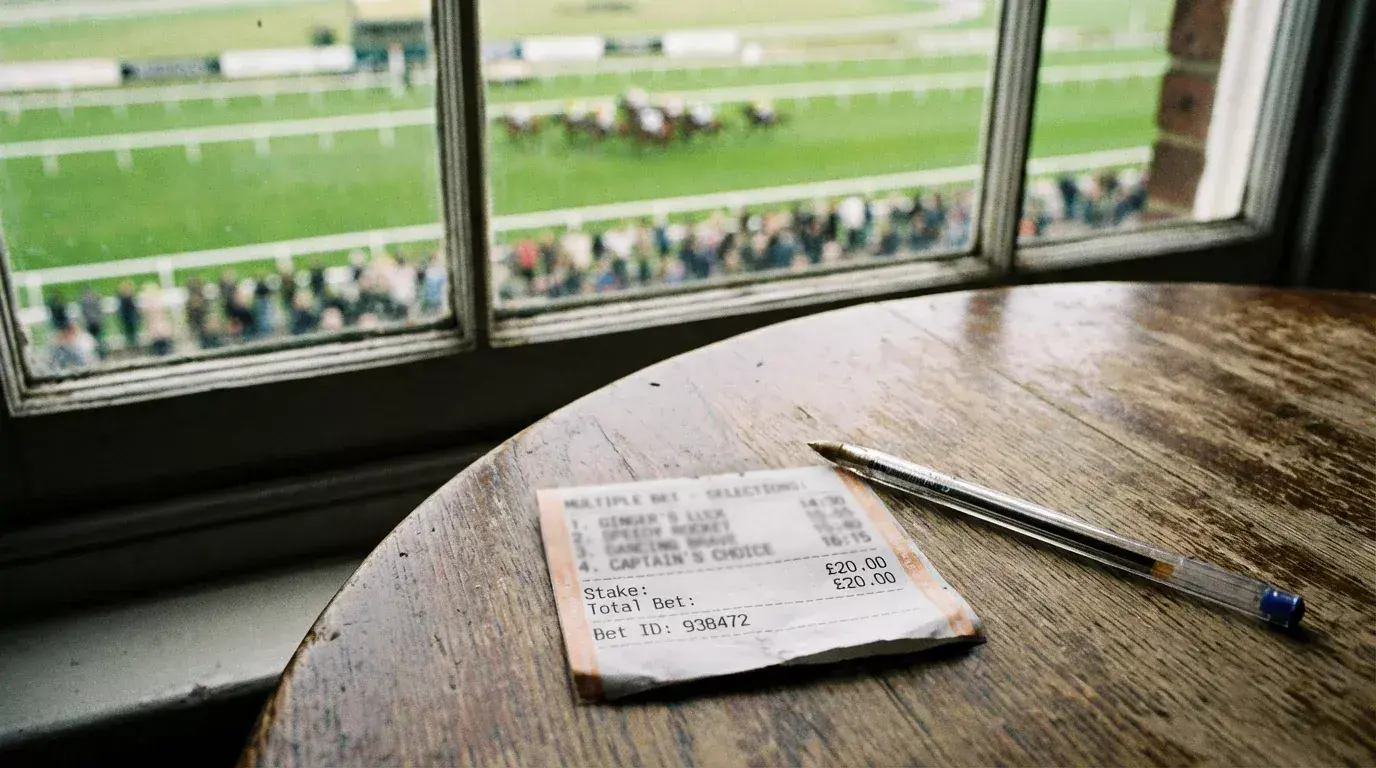
Compounding Returns with UK Place Accumulators
The bet that taught me most about each-way accumulators was a four-fold where three of my selections won and one placed. I expected a tidy payout. What I actually received was two separate returns: a substantial win accumulator from the three winners combined with the one placer, and a smaller but meaningful place accumulator from all four horses placing. That dual-settlement structure is what makes each-way multiples both powerful and confusing – and it is why so many punters either avoid them entirely or use them without understanding the mechanics.
Each-way bets represent approximately 22% of all UK horse racing wagers, and accumulators – doubles, trebles, four-folds, and beyond – are a popular way to amplify returns from multiple selections across a race card. When you combine each-way with an accumulator, you are effectively placing two separate accumulators: one on the win side and one on the place side. The returns on each leg compound through the multiple independently, producing two distinct payout streams that are settled separately. More than 80% of bets at the 2024 Cheltenham Festival were placed via mobile, and the ease of building each-way accumulators on apps has made them a staple of festival betting.
How Each-Way Accumulators Are Settled
Settlement is the part that trips people up, so let me break it down plainly.
An each-way accumulator is two accumulators running in parallel. The win accumulator requires every selection to win for it to pay out. The place accumulator requires every selection to place (which includes winning). If all four horses in a four-fold win, both the win acca and the place acca pay. If three win and one places, the win acca is dead (because one leg lost), but the place acca survives (because all four placed). If one horse finishes outside the places, both accumulators lose.
Here is a worked example. You place a £2 each-way treble (£4 total stake) on three horses: Horse A at 6/1, Horse B at 8/1, Horse C at 10/1. Place terms are 1/4 odds across all three races.
Scenario: all three win. Win acca pays: £2 x 7 x 9 x 11 = £1,386. Place acca pays: £2 x 2.5 x 3 x 3.5 = £52.50. Total return: £1,438.50 (plus stakes). The win acca carries the bulk of the return, but the place acca adds a meaningful supplement.
Scenario: Horse A wins, Horse B wins, Horse C places (finishes second). Win acca loses (Horse C did not win). Place acca pays: £2 x 2.5 x 3 x 3.5 = £52.50 (plus £2 stake). The win acca is worthless, but the place acca still delivers a healthy return from a £4 total outlay.
Scenario: Horse A wins, Horse B places, Horse C places. Win acca loses. Place acca pays: £2 x 2.5 x 3 x 3.5 = £52.50. Same place return regardless of which horses won versus placed, because the place odds apply to all legs.
The critical insight: the place accumulator pays the same amount whether a horse wins or merely places, because the place odds are the same in both cases (the horse placed in either scenario). The win accumulator is all or nothing – one non-winner kills it. This asymmetry is why each-way accumulators survive partial success better than straight win accumulators.
Each-Way Doubles, Trebles, and Four-Folds Explained
Each-way doubles are the simplest multiple and the one I use most often. Two selections, each-way, creating a win double and a place double. The stake is modest (£5 each way on a double costs £10 total), the settlement is easy to follow, and the place double provides a safety net when one selection wins and the other merely places.
A £5 each-way double on two horses at 8/1 and 10/1 (1/4 place terms) has a total stake of £10. If both win: win double = £5 x 9 x 11 = £495; place double = £5 x 3 x 3.5 = £52.50. Total: £547.50. If one wins and one places: win double = £0; place double = £52.50. The double still returns five times the total stake from the place leg alone.
Trebles add a third leg and increase both the potential return and the risk. The win treble needs all three to win; the place treble needs all three to place. The compounding effect of three place legs at decent odds can produce returns of 20x to 50x the stake, which is why each-way trebles are popular on festival Saturdays when punters have strong opinions across multiple races.
Four-folds and beyond are where the maths becomes seductive but the probabilities become harsh. A four-fold each-way accumulator needs all four horses to place for any return at all. Even with a 60% place probability per leg, the chance of all four placing is 0.6^4 = 13%. That is a bet you expect to lose 87% of the time. The returns when it lands are spectacular – four-fold each-way accas at mid-range odds can return 100x to 500x the stake – but the frequency of collection is low enough that you need to be realistic about long-term profitability.
Full-Cover Bets: A Brief Overview
Beyond simple accumulators, full-cover bets package multiple combinations of doubles, trebles, and accumulators from a set of selections. The most common are the Lucky 15 (four selections, 15 bets), the Lucky 31 (five selections, 31 bets), and the Yankee (four selections, 11 bets). Each of these can be placed each-way, doubling the number of bets and the total stake.
Full-cover each-way bets are a topic substantial enough to warrant their own treatment. The mechanics of how they settle – which combinations survive when some horses win, some place, and some miss – are complex and depend on the specific bet type. I cover the most popular variant in detail in my guide to the each-way Lucky 15, which breaks down the 30-bet structure and shows when it offers genuine value over separate each-way singles.
If one leg of my each-way accumulator places but does not win, how is the whole bet settled?
The win accumulator loses because all legs must win for it to pay out. The place accumulator survives as long as every leg places (which includes winning). So if you have a four-fold and three horses win while one places, the win acca pays nothing but the place acca pays in full – compounding the place odds from all four legs. If any single horse finishes outside the places, both the win and place accumulators lose entirely.
Are each-way Lucky 15s expensive, and when are they worth the stake?
An each-way Lucky 15 comprises 30 bets (15 win-side, 15 place-side), so a £1 each-way Lucky 15 costs £30 total. This is a significant outlay for recreational bettors. Lucky 15s offer value when all four selections have a realistic chance of placing, because the full-cover structure means any combination of placing horses generates returns through the doubles, trebles, and singles. They are most effective when your selections are at longer odds (8/1 or above) where the place returns on individual legs are substantial enough to justify the multiple-bet structure.
Written by the editors at win Place bet Horse Racing.