Overround Place Market: UK Bookmaker Margins
 Available in US
Hidden Bookmaker Margins in UK Place Markets
Early in my betting career, I assumed the bookmaker’s margin was roughly the same whether I bet to win or each-way. It took a spreadsheet, a few hundred race cards, and a bruised ego to discover the truth: the place market carries a significantly higher overround than the win market, and every each-way bettor is paying for it whether they realise it or not.
The Gambling Commission seemed to want to reduce gambling to just small-stakes gamblers, as former Jockey Club Chief Executive Nevin Truesdale put it bluntly in 2025 – but regardless of regulatory pressures, the bookmaker’s structural edge in place markets has remained consistent. Remote betting on horse racing generated £766.7 million in gross gambling yield for licensed operators in the financial year ending March 2025, and a substantial chunk of that revenue is extracted through the margins embedded in each-way and place pricing. Understanding where the margin sits is the first step toward managing it.
How Overround Works in Horse Racing Betting
Overround – sometimes called the “vig” or the “juice” – is the amount by which the bookmaker’s implied probabilities for all runners in a race exceed 100%. In a perfectly fair market, the implied probabilities would sum to exactly 100%, meaning no margin for the bookmaker. In reality, they sum to more, and the excess is the bookmaker’s built-in profit.
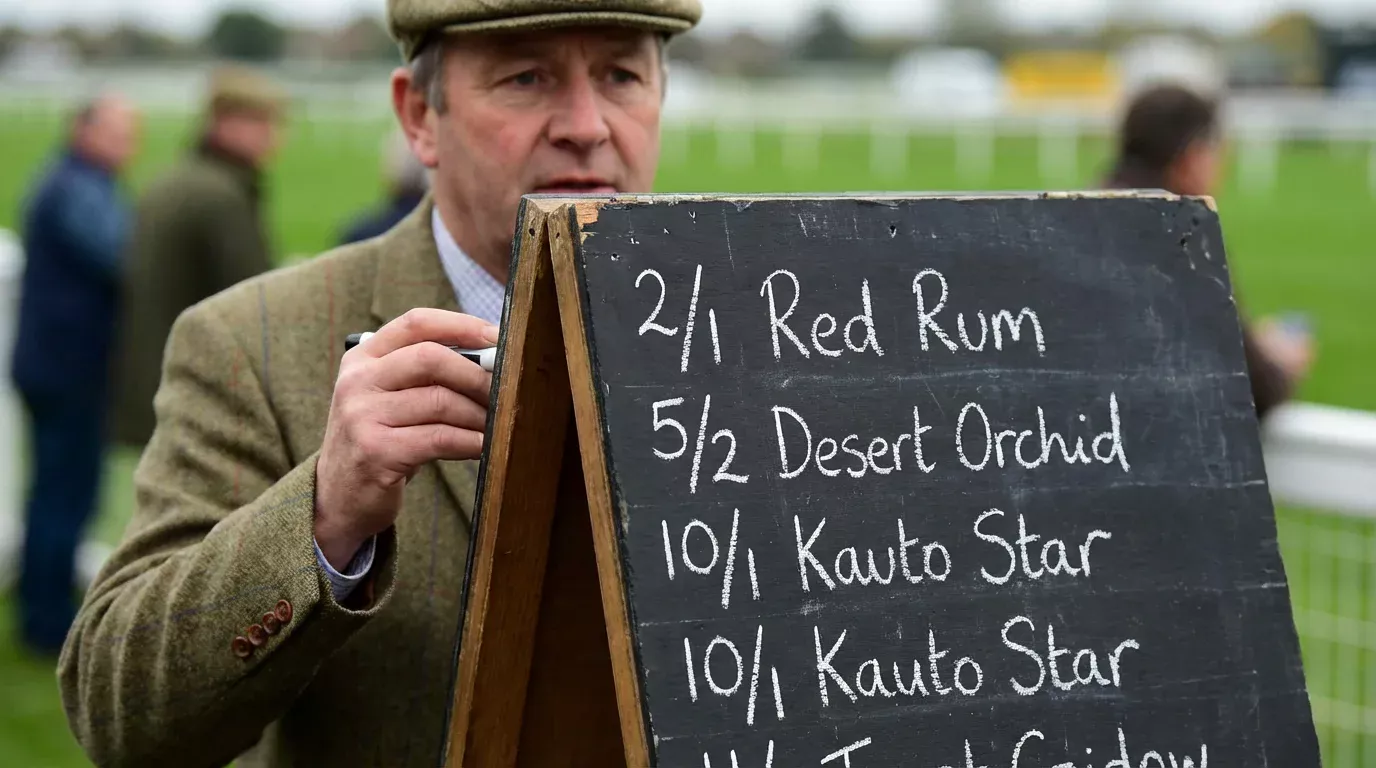
A simple example: a two-horse race where both runners are priced at evens (1/1). The implied probability of each at evens is 50%, so the total is 100%. But a bookmaker prices them at 5/6 each (implied probability roughly 54.5% each), giving a total of 109%. That 9% overround is the margin. Over thousands of bets, it ensures the bookmaker profits regardless of which horse wins.
A typical bookmaker overround on the win market for an average UK horse race sits between 110% and 125%. Competitive Saturday races might be priced tighter at 108 to 112%. Midweek all-weather cards can balloon to 130% or higher. The overround is not a fixed number – it varies by race, by bookmaker, and by how much money the market has attracted.
Win Market vs Place Market: Comparing the Bookmaker’s Cut
Here is where the maths gets uncomfortable for each-way bettors. The place market overround is almost always higher than the win market overround on the same race, and the gap can be dramatic.
The reason is structural. In the win market, there is one winner and the bookmaker prices all runners against that single outcome. In the place market, there are multiple qualifying positions (two, three, or four depending on the field), and the bookmaker prices each runner’s chance of finishing in any of those positions. The cumulative implied probabilities for the place market naturally sum to a higher total because more outcomes qualify as “winning” bets, and the bookmaker adds margin on top of each one.
I have calculated the place market overround on dozens of races, and the typical range is 140% to 180% – compared to 110% to 125% on the win market for the same events. In extreme cases, particularly smaller fields with short-priced favourites, the place overround can exceed 200%. That means the bookmaker’s embedded margin on the place part of your each-way bet is, in many races, double or triple the margin on the win part.
Why does this matter practically? Because each-way bettors are exposed to the place overround on every bet. If you place a £10 each-way wager, £10 goes into the win market at one overround and £10 goes into the place market at a higher overround. Your total exposure to the bookmaker’s margin is a blend of the two – and the place half is dragging the average up. Over a season of each-way betting, the cumulative cost of the higher place overround is a significant drag on returns.
How to Identify Value Despite a Higher Place Overround
Knowing the overround is high does not mean you should avoid place betting. It means you should be more selective about when and where you bet, and more rigorous about identifying genuine value within the inflated market.
The first tool is comparison. Different bookmakers price the place market with different overrounds. On a given race, one firm might have a place overround of 150% while another sits at 165%. By placing your each-way bet with the firm offering the lower overround, you capture better value on the place leg without doing any handicapping work. This is pure margin management, and it takes two minutes of comparison across apps.
The second tool is identifying horses where the place overround is disproportionately loaded onto other runners. Bookmakers do not distribute their margin evenly across the field. They tend to load the most overround onto outsiders and less onto favourites, because the majority of bettors take short-priced selections and would notice a margin-inflated price more readily. This means that mid-range and longer-priced horses often carry more embedded margin in their place odds, while the favourite’s place price is closer to “true” probability. However, when a longer-priced horse has a strong each-way profile – consistent place form, suited by the conditions – the genuine place probability may exceed the overround-adjusted implied probability, creating value despite the higher margin.
The third tool is using exchange place markets as a benchmark. The exchange place market operates near 101 to 102% overround, giving you a much cleaner estimate of each horse’s “true” place probability. By comparing the exchange place odds to the bookmaker’s each-way place fraction, you can identify where the bookmaker’s margin is thinnest and thickest for specific horses. If the exchange says a horse has a 30% chance of placing and the bookmaker’s implied probability is 25%, you have found value – the bookmaker’s place price is generous relative to the market consensus.
My routine before any each-way bet: check the exchange place price, calculate the bookmaker’s implied place odds from the each-way fraction, and compare. If the bookmaker’s implied price is within 10% of the exchange price, the margin is acceptable. If the gap exceeds 15%, I either bet on the exchange or skip the bet entirely. This discipline does not eliminate the bookmaker’s place market edge, but it ensures I am not paying more margin than necessary on every wager.
Why is the overround on place markets higher than on win markets?
Because the place market has multiple qualifying outcomes (two, three, or four paid places depending on the field), the bookmaker builds margin into each runner’s probability of finishing in any of those positions. The cumulative implied probabilities are naturally higher than in the win market where there is only one winner. On top of this structural factor, bookmakers tend to be less competitive on place pricing because most punters compare win odds rather than place odds when choosing where to bet.
How do I calculate the implied overround from a set of each-way place fractions?
Convert each runner’s place odds to an implied probability (1 divided by the decimal odds), then sum all the implied probabilities. If the total exceeds 100%, the excess is the overround. For example, if a race has eight runners and their place implied probabilities sum to 165%, the place overround is 65%. This calculation requires knowing each runner’s win odds and applying the bookmaker’s each-way fraction to derive the place odds.
Published by the win Place bet Horse Racing team.